PLANTS OF THE HERITAGE WOODLANDS
|
|
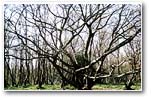
Many trees in the Heritage Woodlands, such as this Oak in Prior Royd, are multi-stemmed suggesting that they were once coppiced.
|
The 35 Heritage Woodlands are ancient woodlands
and as a result of their long history, a range of wildlife is found
that is only present in old woods. As a general rule, the areas
currently richest in flowering plants are those undisturbed by planting
of non-native trees, particularly where these are along streams,
or close to woodland edges where more light can reach the woodland
floor.
Trees and shrubs found in the woodlands include a number that
are typical of ancient woodlands such as Sessile
Oak, Holly,
Crab
Apple, Wild
Cherry and Field
Maple. The first of these is very frequent and widespread, occurring
in all 35 of the Heritage Woodlands.
|
|
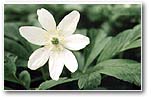
Wood anemone, an indicator of ancient woodland, is found in many parts of the Heritage Woodlands.
|
The Heritage Woodlands are
also rich in flowering plants. Again, a number of these are rarely
found outside ancient woodlands. Bluebell
and the white flowers of the Wood
Anemone make a fine display in many of the woodlands in the early
spring. The latter is particularly strongly associated with ancient
woodland, being only rarely found outside of this, as are Sweet
Woodruff, Wood
Sorrel, Yellow
Archangel and Yellow
Pimpernel. Other flowers typical of ancient woodlands include
Dog's
Mercury, Slender St John's-wort, Greater
Stitchwort, Pignut,
Ramsons,
Wood
Speedwell and Opposite-leaved
Golden Saxifrage, the last of these being particularly associated
with streamsides. The ancient woodland indicator, Common
Cow-wheat is frequent in Wheata
Wood.
As well as these woodland flowers, the grasses Wood
Millet and Wood
Melick are very strongly associated with ancient woodlands,
as are Remote
Sedge, Great
Woodrush and Hairy
Woodrush.
In addition to their different woodland types,
many of the Heritage Woodlands contain a variety of other
habitats, each of which supports its own range of plant species.
Open grassland or heathland areas, either within or on the edge
of the woodlands, tend to support plants favouring acid soils, such
as Heath
Bedstraw, Heather,
Bilberry
and Field
Woodrush. The presence of wet areas greatly increases the variety
of plants found. Typical plants found in wet places within the Heritage
Woodlands include Angelica,
Brooklime,
Ladies
Smock, Valerian,
Water
Mint, Watercress,
Water
Forget-me-not, Common
Spotted Orchid and Meadowsweet.
|
|
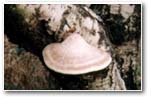
The fungus Birch Polypore in Woolley Wood.
|
As well as flowering plants, the Heritage Woodlands support a range of other plants such as mosses, liverworts, lichens, fungi and ferns. In autumn, fungi are particularly common in some of the woodlands. For example, Canklow Wood has an exceedingly rich fungus flora with over 130 species of larger fungi having been recorded within the last 20 years, many of which are rare or uncommon in the area. Fungi recorded in the Heritage Woodlands include Shaggy Ink-cap, Common Earth-ball, Giant Polypore, Jew's Ear, Sulphur Tuft, Oyster Mushroom, Wood Blewit, Stump Puffball, Stinkhorn and the characteristic red and white spotted Fly Agaric.
  
|
|