 |  |  |  |  |  |  |  |  |


| ||||||||||
| | |||||||||
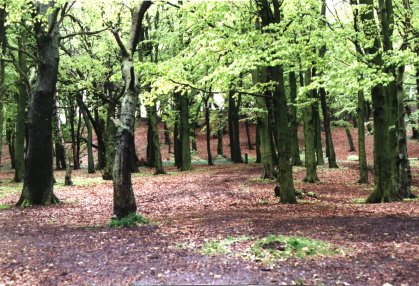
TREES Of the native species, Oak and Birch are particularly widespread, especially on steep dry slopes and dry areas of flatter ground. Ash can be abundant in damper areas of woodland, particularly in valley bottoms and on stream banks. Although Elm was once an important species in these areas, its population has been heavily reduced as a result of Dutch Elm Disease and the only Elms found in the canopy are now dead. Other native trees found in Rollestone Wood include Rowan, Wild Cherry, Alder and Willow, the last two of these being associated with particularly wet areas.
The most common non-native
trees in Rollestone Wood are Beech and Sycamore. These can be found throughout
the wood, although as would be expected, they are particularly associated
with its extensive plantation areas. Other non-native species found in
the wood are Sweet Chestnut, Larch and Pine. SHRUBS Of the shrubs found
in the valley, Hazel is the most widespread. Other shrubs include Holly,
Hawthorn, Guelder Rose and Blackthorn. As with most of the other woodlands in the valley, the ground flora is richest on the stream banks and other wetter areas where ancient woodland indicator species are joined by species characteristic of wet woodlands such as Ramsons, Golden Saxifrage, Meadowsweet and Valerian. In contrast, there are some very impoverished areas under Beech plantations. Steeper, drier sites tend to be dominated by grasses, in particular Wavy-hair Grass and Creeping Soft-grass, plus Bracken. MORE
INFORMATION |