|
CARR, ASHES
& CONEYGREE WOODS - VEGETATION
There are
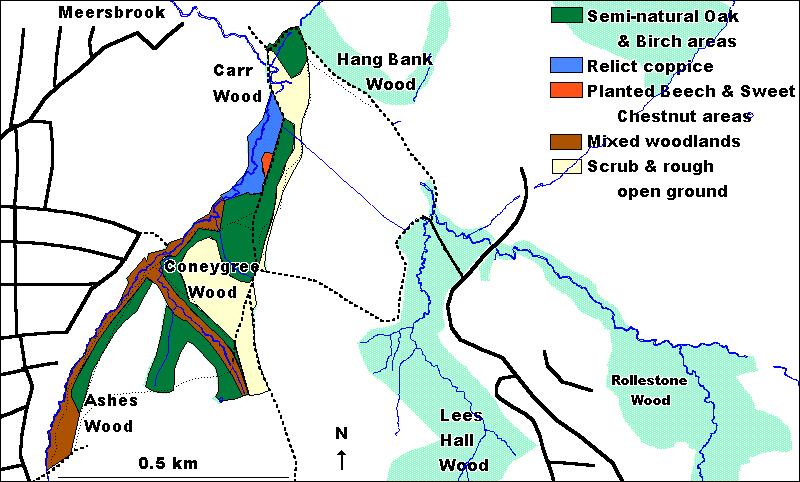
four main types of woodland in Carr, Ashes and Coneygree Woods.
Mixed woodland is typical of streamsides and lower valley sides
in Ashes and Coneygree Woods. Low
lying parts of Carr Wood possess the only surviving area
of coppice in the Gleadless Valley in which some of the Hazel coppice
stools are over one metre in diameter.
Higher up
on valley sides, where the soils are generally drier and more acidic,
semi-natural Oak and Birch woodland becomes dominant.
Carr, Ashes and Coneygree Woods differ from other woodlands in the
Gleadless Valley in containing relatively few areas dominated by
non-native trees. An exception to this is a part of Carr Wood which
has a small area dominated by Beech and Sweet Chestnut.
As well as these woodland areas, significant areas along the eastern
edge of Carr and Coneygree Woods consist of more open areas of scrub
and other rough vegetation.
VEGETATION TYPES
The distribution of different vegetation types in Carr, Ashes &
Coneygree Woods can be seen on the map below.
More detailed
information on each vegetation type can be seen by clicking on different
areas of the map.
  
|