

The ProgrammeThe WoodlandsLocation MapEventsNewsSchoolsChildrenInteractiveFeedback
The ProgrammeFuelling a Revolution
More information - Bowden Housteads Wood
  visiting the wood
  landforms, rocks and soils
  history and heritage
» plants and trees
  vegetation
  birds and animals
  a woodland walk
  educational use
  woodland restoration and
   management work
BOWDEN HOUSTEADS WOOD - PLANTS AND TREES

TREES
Bowden Housteads Wood is characterised by a mixture of trees native to the South Yorkshire area and non-native species that have been introduced from elsewhere by man.

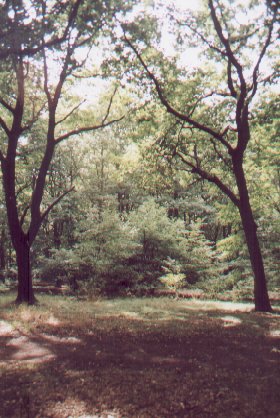
The commonest native tree in the wood is Sessile Oak. Other native species that occur throughout the wood include Silver Birch, Whitebeam, Rowan, Wild Cherry and Wych Elm. A greater variety of native tree species is found in association with woodland streams. Here, Ash and Alder can be found, along with Wych Elm, Oak and Field Maple.

In some areas of Bowden Housteads Wood, Beech is almost the only tree species. Beech occurs naturally in the south of England but has been introduced artificially to South Yorkshire. Beech trees can also be found in areas of Oak-dominated woodland, as can other non-native trees such as Sweet Chestnut and Sycamore.

The area of wet woodland found along Car Brook in the northern section of the wood is dominated by Crack Willow

Young trees are most common in those places where the woodland canopy has been opened up by group felling.

The degree to which young trees can grow on the woodland floor varies considerably, depending largely upon the density of the canopy. There is very little regeneration under the deep shade of Beech plantations, except in those places where the tree canopy has been opened up by group felling.

SHRUBS
In many parts of Bowden Housteads Wood the shrub layer is poorly developed. This is particular the case under the dense shade cast by plantations of Beech. Under Oak-dominated woodland can be found occasional Holly, Hawthorn and young Hazel.
Bramble also occurs under Oak in areas of more open tree canopy.


The shrub layer in areas associated with woodland streams is generally better developed than that elsewhere in the wood. The diverse range of shrubs found in such places includes frequent Hazel, Dog Rose and Guelder Rose.

WOODLAND GROUND FLORA
The ground flora under the Oak-dominated woodland is mainly dominated by grasses. Where the canopy is more open, Bracken is also frequent.

Bowden Housteads Wood contains a large number of plant species that indicate that it
is a woodland of ancient origin. These indicator species include Bluebell, which is found throughout the site and which can be abundant in places, as well as Wood Anemone and Yellow Archangel. The ancient woodland indicators, Pignut, Dog's Mercury, Yellow Pimpernel and Remote Sedge are particularly associated with streams and the area of
wet woodland along the Car Brook in the north of the site.

Other common ground flora species include Lesser Celandine and Creeping Buttercup. As well as flowers, Bowden Housteads Wood also supports various species of grasses, rushes, sedges and ferns.

Bare ground is frequent in the dense shade under plantations of Beech. In contrast, the richest areas of ground flora are found in association with streams. Wetland species found in such places include Angelica, Brooklime, Common Valerian, Large and Wavy Bittercresses, Great Willowherb and Meadowsweet.

NON-WOODLAND HABITATS
At the southern tip of the site, to the west of the Mosborough Parkway, Bowden Housteads Wood merges into the mosaic of unimproved grassland, heathland, wetland, scrub and willow carr that characterises the Car Brook Ravine and Spring Wood area. The variety of habitats in this relatively small area results in a wide range of plant species.

More general information on the plants and trees of the Heritage Woodlands can be found elsewhere on this website.

backBack to Topback