|
SCHOLES
COPPICE & BRAY PLANTATION - ANIMALS
Although
affected by the planting of introduced trees such as Sweet Chestnut
and Beech, Scholes Coppice and Bray Plantation continue to support
a wide range of invertebrates, birds and other animals.
Areas of young
trees in the centre of Scholes Coppice and in former clearings are
of particular value for wildlife. Woodland edges are also important,
particularly for invertebrates and birds. Further diversity is added
by the wetland area in the northern corner of the site.
INVERTEBRATES
Between them
the two woodlands support more than 200 species of invertebrates,
these including millipedes, froghoppers, beetles, hoverflies, butterflies
and moths.
 |
|
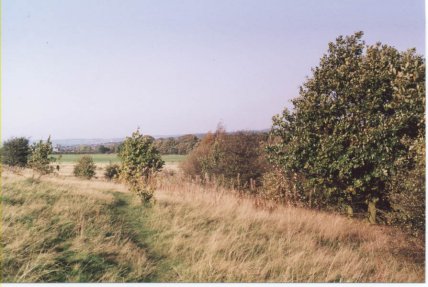
The richest
areas for both plants and animals are often on the woodland
edges where there is more light and a greater choice of habitats.
|
Butterflies
found in Scholes Coppice include Purple Hairstreak, a protected
species, the caterpillar of which feeds on the young foliage of
Oak, Ash and Sweet Chestnut, and for which an uneven-aged woodland
structure is ideal. The relatively uncommon Speckled Wood butterfly,
which loves dappled sunlight, has recently become a more frequent
feature of parts of Scholes Coppice. Other butterflies found in
the wood include Comma and Holly Blue. A wide variety of moths has
also been recorded including Clouded Silver, Lime Hawk Moth and
Purple Thorn.
Other notable invertebrates found in Scholes Coppice include a species
of millipede, a false click beetle and a hoverfly.
AMPHIBIANS
Common Frog occurs in association with the two wetland areas in
the northern corner of Scholes Coppice.
BIRDS
Since the 1970s,
more than 50 bird species have been recorded in Scholes Coppice
and Bray Plantation, over half of which breed.
Song Thrush,
Linnet and Bullfinch, three birds found in Scholes Coppice, are
of particular importance as they are species that have declined
sharply in numbers in recent years. All three often nest in bushes
on the woodland edge. Of the three species, Bullfinch is the one
most associated with woodland where it feeds on seeds, buds and
tree flowers close to the woodland edge. In contrast, Song Thrush
and Linnet find much of their food in adjacent open areas, such
as grassland and gardens. Other birds which breed in the woodlands,
but which feed in adjacent habitats such as Keppel's Field, include
Carrion Crow, Magpie, Wood Pigeon, and Mistle Thrush.
The mature woodland
canopy is particularly important for birds such as Tawny Owl, Sparrowhawk,
Nuthatch, Great and Blue Tit, Jay, Blackcap and Chiffchaff. Standing
and fallen deadwood acts as a food source and nesting place for
Greater and Lesser Spotted Woodpeckers and Treecreeper.
Other bird species
recorded include Kestrel and Little Owl; Chaffinch and Greenfinch;
Wren, Goldcrest, Collared Dove, Cuckoo, Rook, House Sparrow, Magpie,
Siskin, Redpoll, Dunnock, Long-tailed Tit, Willow Tit, Tree Pipit,
Pheasant, Yellowhammer, and Redpoll. The winter visitor, Fieldfare
and the summer visitors, Willow Warbler, Garden Warbler, Wood Warbler
and Whitethroat and Lesser Whitethroat have also been seen.
MAMMALS
The site supports
two species of bat typical of mature woodland. One of these, Leisler's
Bat, is a rare species in South Yorkshire. It is a forest bat which
roosts in tree holes, and feeds on insects flying above the woodland
canopy. The other bat species, Pipistrelle, though once common,
is now also declining in numbers as a result of a reduction in abundance
of its insect prey and the loss of winter roosting sites in buildings
and old trees.
Other animals
recorded in the two woods include Fox, Rabbit, Hedgehog, Weasel,
Stoat, Grey Squirrel, Bank Vole and Hare. The last of these is found
mainly on agricultural land, and has suffered badly from the intensification
of farming, which has converted much of its grassland habitat to
arable land. Keppel's Field probably provides a good breeding and
feeding habitat for this species and it probably uses the woodlands
mainly for shelter rather than for feeding.
MORE INFORMATION
More general
information on the birds and animals
of the Heritage Woodlands is available elsewhere on this website.
  
|