WOOLLEY WOOD - ANIMALS
INVERTEBRATES
More than 200 different invertebrates have been recorded from Woolley
Wood. Of these, at least 100 are butterflies and moths such as Common
Blue, Meadow Brown, Small Skipper, Small White and Comma.
Scale insects, which live on the bark of Sycamore, are particularly
noticeable in parts of the wood. These cling to the twigs and derive
their name from their waxy or horny scales.
Other invertebrates recorded from the wood have included Soldier
Beetle, Buff-tailed Bumble-bee and Seven-spot Lady bird. A number
of the invertebrates recorded in the woodland are ancient woodland
indicators.
BIRDS
|
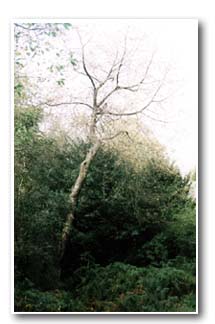
Yew and
Wild Cherry are both
important sources of food for birds.
|
Woolley Wood supports a
rich variety of birds and these have been extensively studied. The
relatively inaccessible 'ravine' area and the steeply sloping upper
parts of the wood are of particularly high value to birds, partly
because parts of the adjacent Concord Park provide a valuable feeding
site for both birds nesting in the wood and migrant species.
Birds breeding in the woodland include Sparrowhawk, Great-spotted
Woodpecker, Wren, Robin, Blackbird, Mistle Thrush, Long- tailed
Tit, Willow Tit, Coal Tit, Blue Tit, Great Tit, Nuthatch, Jay and
Greenfinch. At least one pair of Hawfinches is known to have nested
in the wood in the past. Another species thought to breed in the
woodland is the elusive, Lesser-spotted Woodpecker and in March,
the ''kee kee'' call of this species may be heard echoing through
the trees.
Summer visitors, many of which probably nest in the wood include
Garden Warbler, Blackcap, Chiffchaff, Willow Warbler, Spotted Flycatcher.
Other probable breeding species include Dunnock, Carrion Crow, Chaffinch,
and the now relatively scarce, Song Thrush.
In winter, especially if there is a good crop of Yew berries and
beechmast, Woolley Wood attracts large numbers of Song Thrushes,
Blackbirds, Fieldfares and Redwings. A small area towards the south-eastern
end of the site is an important autumn/winter feeding ground for
birds, especially Hawfinch. Other winter visitors include abundant
Brambling, Greenfinch, Siskin, Waxwing, parties of Goldcrest, Firecrest
and Goldfinch. In winter, tit numbers also increase.
Other bird species recorded in Woolley Wood, but not listed above,
include Kestrel, Collared Dove, Green Woodpecker, Wood Warbler,
House Sparrow, Willow Tit, Moorhen, Woodcock, Tawny Owl, Grey Wagtail,
Nuthatch and Treecreeper.
MAMMALS
Mammals recorded in the wood include Mole, Grey Squirrel, Hedgehog,
Fox, Rabbit, Weasel and various species of Shrew. Bat species associated
with the wood have included Pipistrelle, Noctule and Leislers bats.
More general information on the birds
and animals of the Heritage Woodlands is available elsewhere
on this website.