 |  |  |  |  |  |  |  |  |


| ||||||||||
| | |||||||||
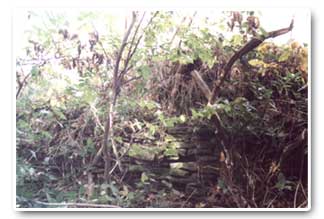
ARCHAEOLOGY Recent archaeological surveys as part of the 'Fuelling a Revolution' programme have revealed a number of features relating to the past management of the wood, including a possible medieval boundary ditch, an old drystone wall, and platforms associated with charcoal burning. A number of quarries, pits and hollows found within the wood are associated with the search for coal and other minerals. The sandstones underlying the wood are fine-grained and suitable for the production of grindstones, and these were probably produced locally in the 19th century. ANCIENT WOODLAND STATUS The first written record of the wood is in a court record dating from 1597 and refers to it as Woolywoodside, meaning a woodland clearing frequented by wolves, a name that persisted as late as the 19th century. A more detailed description can be found in a survey dating from 1637, in which the woodland is described in two parts, Little Woolley Wood and Great Woolley Wood. The site and situation of Woolley Wood is typical of ancient woodlands. It is situated on steeply sloping land, other more accessible areas having been cleared for agriculture or settlements. It is also, in common with many other ancient woodlands, located at the edge of a parish, in this case that of Ecclesfield. In addition, 15 plants that indicate that the woodland is of ancient origin have been recorded. Of these, seven are rarely found outside of ancient woodland.
WOODLAND MANAGEMENT The period from 1700 to 1900, when Woolley Wood was owned by the Dukes of Norfolk, is particularly well documented. It is known that the wood was managed as a coppice-with-standards until 1886 and that livestock was not allowed into the wood until the coppice was nearly full grown, when some grazing by tenants was permitted on the payment of a fee. This would have taken place in clearly defined compartments where coppice regrowth was fully established and where grazing could no longer damage the trees. The main use of the long, thin wooden poles produced by the coppicing of Woolley Wood is likely to have been the production of charcoal for the iron smelting and steel industries. Until 1922 there was a charcoal works at Blackburn Wheel near to Woolley Wood. In addition, timber from large trees felled in the wood was sold to local sawmills and the bark from Oak trees was sold for use in the leather tanning industry. Maps show that the shape of Woolley Wood remained remarkably constant between at least the late 16th century and the first half of the 19th century. Following this, the north-eastern boundary of the wood underwent some substantial changes. Until at least 1812, parts of the wood extended right up to the banks of the Blackburn Brook. After this however, this area was markedly affected by the construction of two railways and the main Ecclesfield Road. The relatively low lying area of wet woodland cleared is known to have contained considerable quantities of Alder, a tree now found only infrequently in Woolley Wood. Other areas cleared of trees in the 19th century included the triangular area now occupied by Low Wincobank Recreation Ground. In more recent years, small areas of woodland on the south-western edge of the wood have been cleared to create fairways and tees for the adjoining golf course. As coppice management of woods became less economically viable, mainly
as a result of the replacement of charcoal as a fuel by coal, and the
replacement of wood by iron and steel in building and manufacturing, significant
areas of Woolley Wood were replanted with trees such as Sycamore, and
Hornbeam. The latter is mainly found in semi-natural woodlands in the
south-east of England and is not native to the Sheffield area. There is
no record of when it was planted in Woolley Wood but records of mature
trees being felled in the late 19th century suggest that this was probably
done before 1800. Hornbeam timber is extremely hard and was used to make
cogs and pulleys for machinery before steel became widely available. It
may be that Hornbeams were planted in Woolley Wood to provide components
for the water- powered mills built around Sheffield in the 18th century. Woolley Wood came into the ownership of Sheffield City Council in 1925. FURTHER INFORMATION |