 |  |  |  |  |  |  |  |  |


| ||||||||||
| | |||||||||
ARCHAEOLOGY An archaeological survey of the site is to be carried out as part of the Fuelling a Revolution programme. ANCIENT WOODLAND
STATUS In order to be classed as an ancient woodland, an area must have been continuously wooded since at least 1600. In fact Cliffe Wood is much older than this, being linked by documentary evidence to the Cluniac and Benedictine monks who inhabited nearby Monk Bretton priory in the 12th century. Another way in which ancient woodlands can be distinguished from more recently established woodlands is by their diverse flora and fauna. Indeed, certain plant species, usually those that spread relatively slowly by vegetative means, are known to be either entirely restricted to, or only rarely found outside, ancient woodlands. These are known as 'indicator species'. Where a number of these species are found together, there is a high likelihood that the wood in which they occur is of ancient origin. A wide range of ancient woodland indicator species occurs in Cliffe Wood, including Wood Sage, Bluebell, Bush Vetch, Bugle, Yellow Archangel, Dog's Mercury, Slender St John's-wort and Toothwort. The tree, Field Maple is also associated with ancient woodlands.
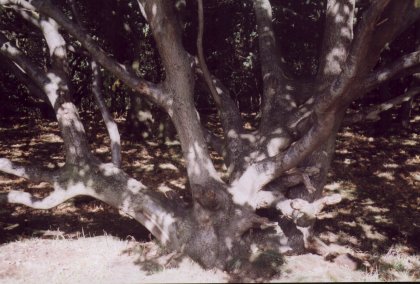
WOODLAND MANAGEMENT Many of the trees, particularly in the upper part of the wood are heavily stunted and this is due at least in part to the ad hoc coppicing received during various strikes, when miners used the trees as a source of firewood. Dearne Valley Park was developed in 1980. Along with the rest of Dearne Valley Park, Cliffe Wood was designated a Local Nature reserve in 1996. The mixed plantation
area in the south west of the site was planted in the 1980's. |